Start your own Laundromats business
Trading in 90 days or your money back
With the Boring Business Club - the fastest way to launch your own cash-flowing, AI-proof, boring business.




Why Laundromats?
Cash business. No receivables. People need clean clothes forever.
You'll learn why 26 million American households need your service, why the industry's extreme fragmentation creates opportunity for new operators, and how Dave Menz turned a rundown Craigslist laundromat into a $1.8 million chain by focusing on operational basics that most owners ignore.
Customers for Laundromats are usually won as locations, not as one-off callers. A site owner, a shop, a block, or a route stop agrees to host the machine or the asset, and the public pays because the thing is there when they need it. The work is keeping the locations stocked, clean, and earning, then adding the next stop once the first ones are boringly reliable. A membership playbook will show the pitch and the contract.
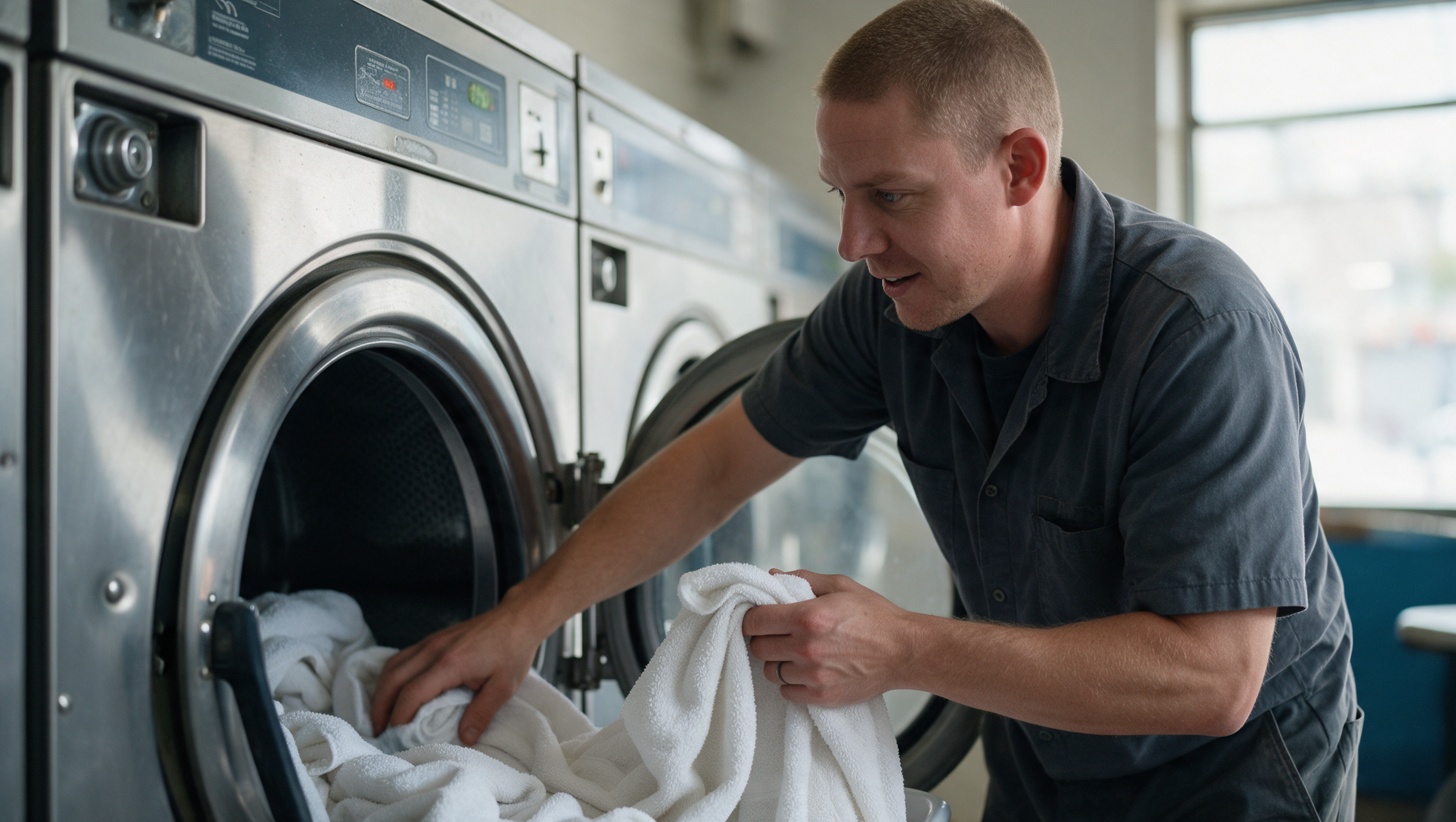
The opportunity
The numbers behind a Laundromats business
Researched from real operators, not projections.
$50k
days
$260k
The real costs, the real margins, the exact 90-day path.
What's Inside the
Boring Business Club
The Boring Business Club is a 90-day launch system built around your Laundromats business - a researched playbook, supplier lists with real prices, sales scripts, compliance checklists and 40+ AI tool tutorials, a community, all in one place.
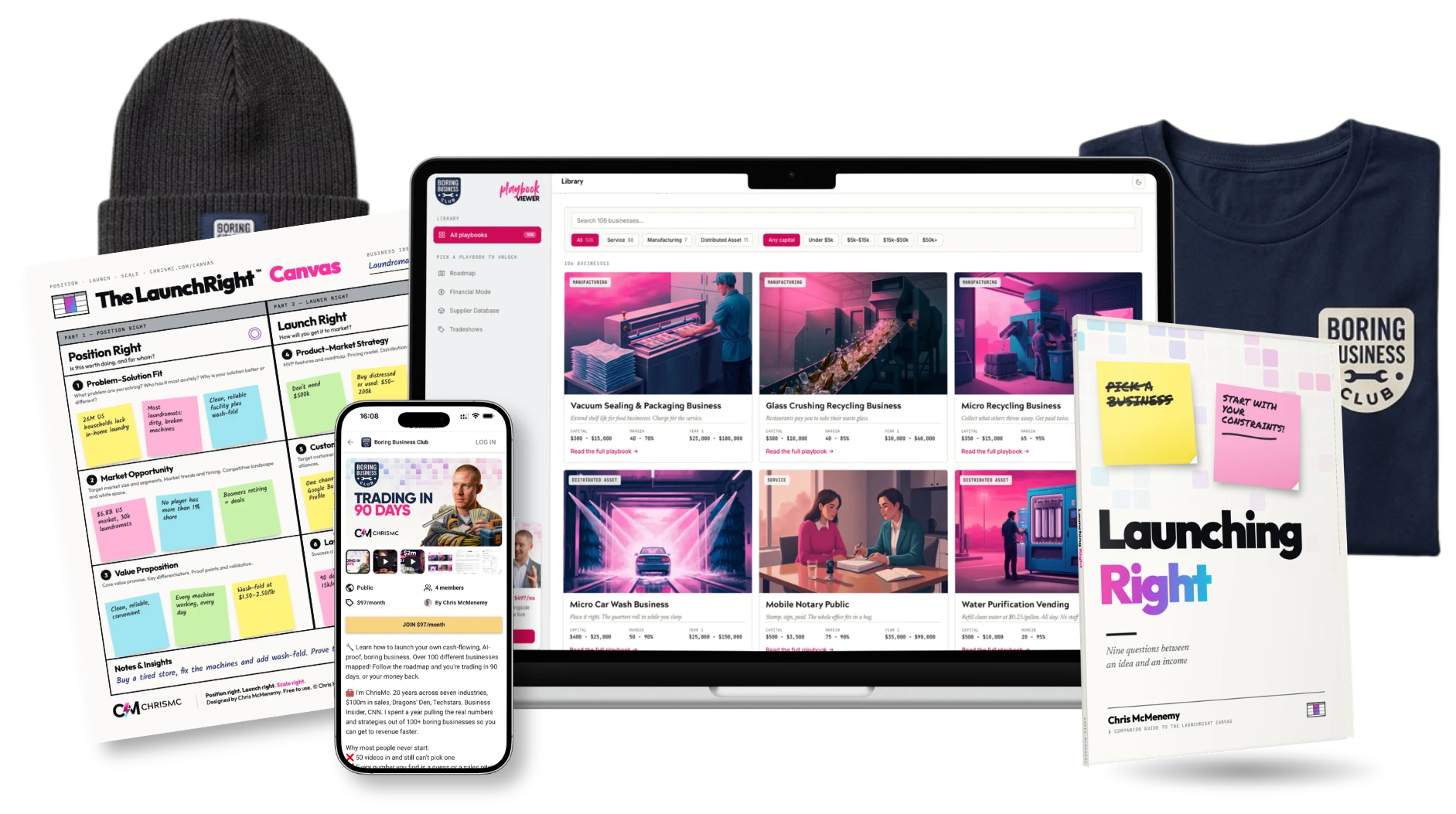
100+ playbooks
Cost, margin, year one and days to revenue for every one
90-day launch roadmap
A day-by-day plan to first revenue, for each business
Supplier lists
Real kit, with real prices and links
Sales scripts
With the exact objections you'll get
Compliance checklists
With the costs and the timelines
40+ AI tool tutorials
The tools that run the business, step by step
Launching Right
Ultimate framework for launching a boring business
Community
Network and seek advice from a community of other boring business founders
Platinum Upgrade
Exclusive merch, DM access to Chris, 1-to-1 coaching, guest speakers & more!
And that's not all
Join today and get these free
$25k in exclusive discounts
Supplier and software deals, members only
Weekly live sessions
Bring your plan, I pull it apart on camera
The LaunchRight Method
The system behind all 129 playbooks
Meet the founder
Why Trust Chris?
Because I've done over $100m in sales across seven different industries - and I started out in exactly these boring, unglamorous businesses.
Mowing lawns, washing cars, computer repair, restoring classic cars. That's where it began - unglamorous work, done for cash, that quietly paid. Over the twenty years since, I've scaled multiple ventures, raised venture capital, won funding on Dragons' Den, and built teams that now employ hundreds of people around the world.
But across all of it the pattern never changed: the ordinary, profitable businesses were the ones that actually made money - not the ones that looked impressive on a pitch deck. The flashy ideas burned cash and attention. The boring ones paid the bills, and then paid for everything else.
So I spent a year analysing over 100 different types of boring businesses, interviewing successful founders and documenting the winning strategies - the startup costs, the margins, the suppliers and the exact scripts - and turned them into step-by-step playbooks. No theory, no guru fluff. Just what actually works, so you can skip the guesswork and get to revenue faster.
Real operators
Successful Laundromats Business Founders
Normal people who turned their dream side hustle into thriving businesses.
We researched and interviewed hundreds of operators - the ones playbooks like the Laundromats were reverse-engineered from. We're talking people who started with almost nothing and built an ordinary, boring business into serious money. The playbook is the path they took, mapped out.
Supermatt Laundry
The start
From scratch
Today
$2M
“Ron Jansen Jr. built Supermatt Laundry into a 24-location operation with over 100 employees and $2M+ in annual revenue.”
Queen City Laundry
The start
From scratch
Today
$1.8M
“I didn't grow up with money, connections, or a blueprint for entrepreneurship. What I did have was a relentless work ethic, a deep desire to build a better life for my family, and a belief that ordinary people can create extraordinary outcomes when they bet on themselves.”
Questions
Before you join
How much does it cost to start Laundromats in the US and the UK?
The published US startup range is $50,000–$500,000. It costs £39,500–£393,500 to start if you convert that published dollar range at $1.27 to £1 and round it. That sterling figure is a comparison for UK readers, not a second market study and not a quote for VAT, wages, or a UK premises.
What margins can Laundromats make?
The published margin range is 60–80%. That is the share left after the direct cost of the job or unit, before the owner's wage and overheads.
How much revenue can Laundromats make in year one?
Year-one revenue is published at $130,000–$260,000. Converted on the same rate and rounded, the year-one range is about £102,500–£204,500.
How long until Laundromats makes its first revenue?
Time to first revenue is published as 30–45 days. That is the time to the first paid work, not the time to the year-one total.
Who is Laundromats for?
The published profile expects a premises or a fixed spot, so the startup range has to cover more than a bag of tools. The published involvement is balanced.
What equipment categories does Laundromats need?
Think in categories, not brands. For this trade the categories on file are: Equipment, Refurbished Equipment, POS Software, Detergent & Supplies, Acquisition Listings, Equipment Financing. A category is a type of kit, not a shop. This page does not name suppliers and it does not give their prices. Buy the smallest set inside those categories that can deliver the job you have actually sold. The published capital range is the budget for that set plus the deposits, the insurance, and the first weeks of materials. A longer list, with names and prices, is members-only.
Start your Laundromats business this week
The whole playbook, the tools, the community and a weekly call with me. $97/month, lock it for life, cancel any time.
90 days to your first customer or your money back